Sometimes I wish I lived in California. Other times, I don’t.
Either way, I’ll always appreciate the state’s pioneering attitude on food waste recycling. San Francisco and several East Bay communities already collect food waste from residents and restaurants in rolling green bins. While
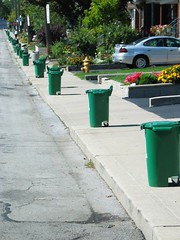
this leads to some further questions, it’s still very progressive.
Now comes news that nearby Contra Costa County will start a pilot project this fall to create energy from restaurant and supermarket waste. It’s a neat initiative that will use a digester to convert restaurant waste to methane, which will be harnessed to produce electricity.
My main beef with the program is that it will only take pre-consumer food waste–the excess prepared food and kitchen scraps–not customers’ plate waste. First, it’d be better to donate unserved food to the hungry. Second, the bus-boy-collected remains, quite hefty at most restaurants, will still go to the landfill.
That distinction will make the program less expensive, but that doesn’t seem to justify only composting half the food waste. Why let mundane details like budget shortfalls stand in the way of being as green as possible? After all, this is still California, right?!
Comments
3 responses to “California Dreaming”
I lived in California for a while – nothing special. The areas where they are the most progressive in theory seems to be the areas where they are the worst – the environment, waste in food and in general, urban sprawl, race relations etc – in practice. One or two towns in the state make headlines for passing progressive laws or doing good things as you describe yet the rest of the state is still the state where industrial agriculture, McMansions, the car crazed culture, and the plastic fast food – microwave food culture all find their zenith.
Thanks for the insight, Robert. Consider my bubble burst!
I hear your point about Cali’s shortcomings, it’s no Magic Kingdom…oh, wait. But aren’t all the blights you mentioned common to all 50 states. It is the home of fast food, but that’s been efficiently exported to the rest of the country (and world).
Cambridge, MA has also started a pilot composting program. They give out 2 1/2 gallon bins with instructions on what to compost and what to leave out (leave out meat, bones, fats and liquids). The hitch is that we must bring our compost to the recycling center. The local Whole Foods will also receive compost. I went to a local meeting and so far so good! Now if we can only arrange pick-up…. One of the big issues for Cambridge is finding physical space to process all the compost. One of the options floating around is to convert the compost to energy. This is probably still a few years out.