Exhibit Two
“Secret Freegan” is a Phoenix resident who recovers food from grocery store dumpsters and donates it to those in need. Inspired by the 2/28/08 episode of Oprah, Secret Freegan has been recovering food for needy families and various shelters since March of 2008. In that time, she estimates she has donated $45,000 worth of food to the hungry.
After Secret Freegan began peering into grocery dumpsters, she could not believe the huge amount of fresh food tossed. (The supermarkets refuse to donate many of these goods because of unfounded liability fears, though much of it is that day’s fresh food.) What she found exceeded what her family and friends could eat, so she called shelters to see if they were interested in receiving her dumpster-found donations. Many were.
Making several daily trips–to prevent food from rotting in the Arizona heat–Secret Freegan has documented the wasted food with hundreds of photographs and a few videos that you can see at her site, Save The Food. Also, you can follow her on Twitter. The below photos are all items she has recovered from supermarket dumpsters:
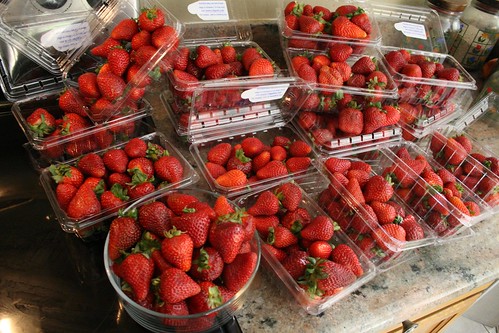
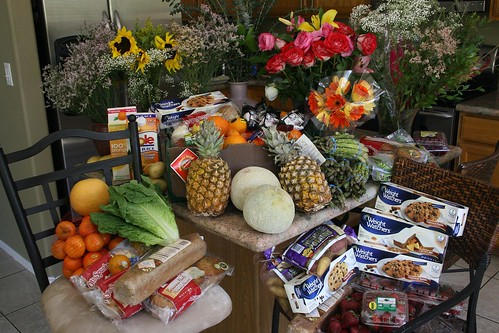
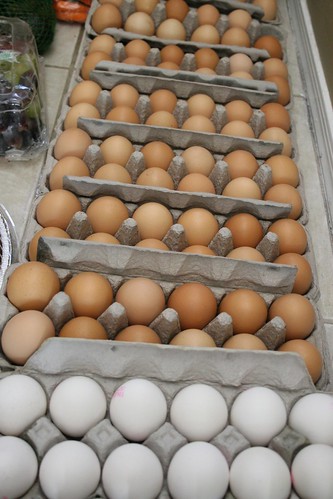
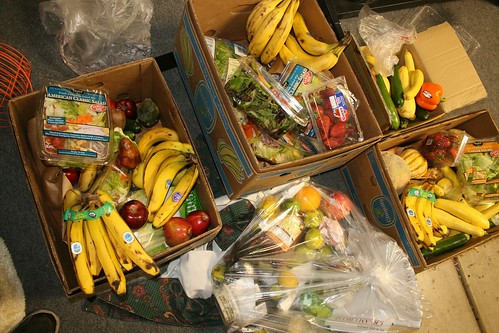
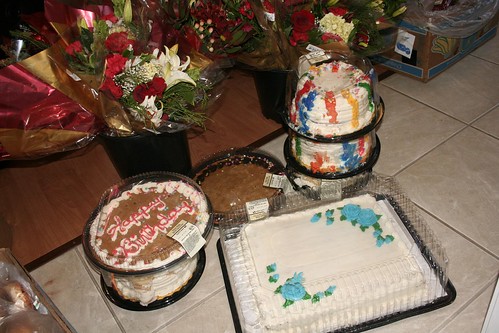
Exhibit One
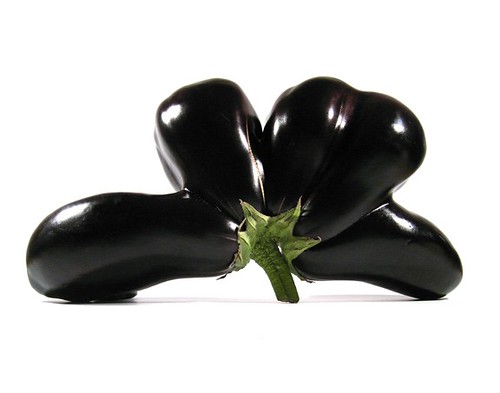
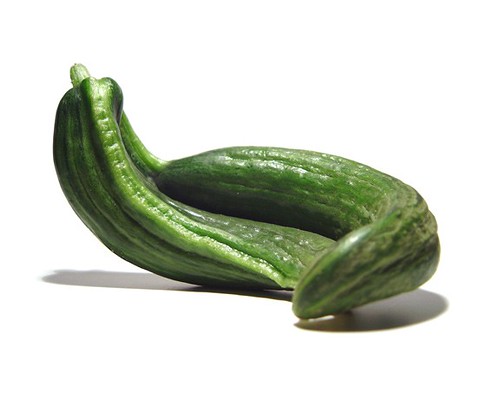
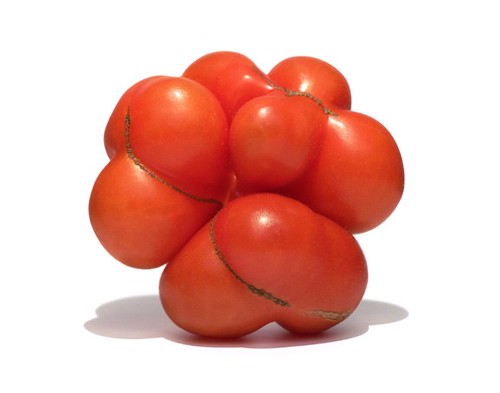
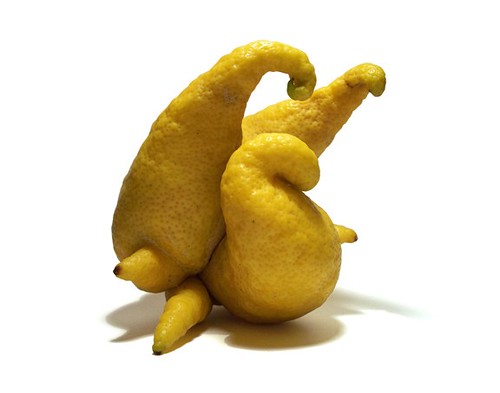
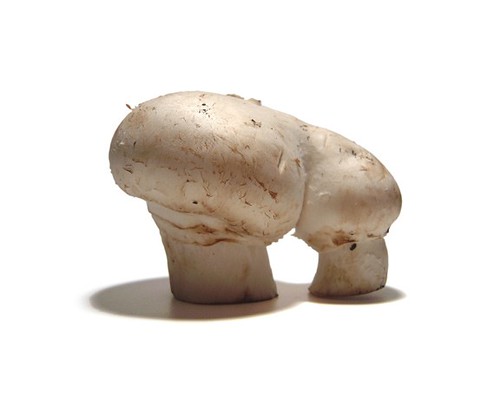
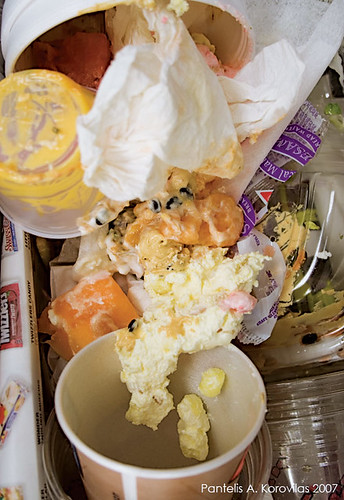
Photographer Pantelis Anastasios Korovilas, 19, hails from Clinton, Iowa and is finishing up a graphic arts program at Clinton Community College. The photos below are part of his ongoing exhibit, Project +. Here, he describes his work:
Through the use of photographs, Project+ is the study of human nature, the increasing amount of food produced and wasted in this country and the unnecessary rise of poverty associated with it.
As the leading contributors to global warming, we add to the problem by dumping an estimated $31 billion worth of food into American landfills. My generation has been born into this “throw-away” society. It has become, for most of us, part of our culture and it is hard to swim against the current or change old habits. We were born with our eyes closed.
My goal is for this to be an ongoing project, to be more than just art, but a cause and a means of reaching out to the public, to my generation. We will someday be the owners of local businesses or part of the 30 million people going hungry in this country. It is time to open our eyes.
For more information, visit his Web site or e-mail: pakorovilas at hotmail.com
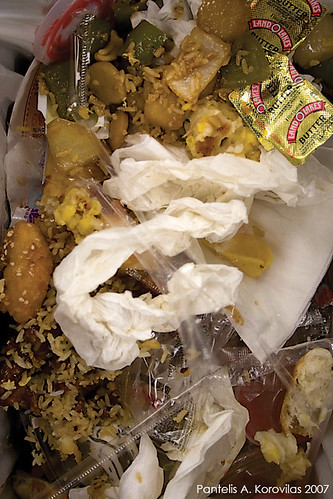
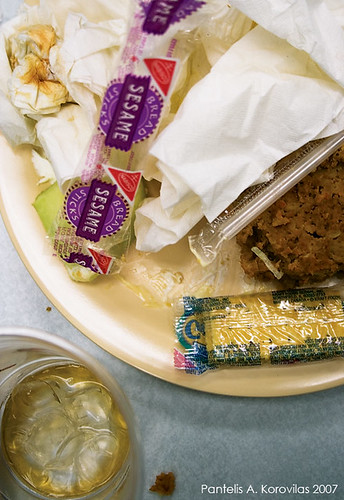
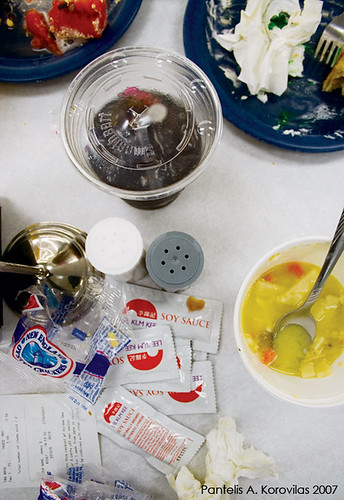

Hi. I’m looking at all the wasted food, but I’m also seeing all the wasted packaging, which to me is an even greater problem. Yes, the food will go to the landfill and create methane gas, which is a bad thing. But the plastic will also go to the landfill and create methane and leach toxic plasticizers and last pretty much forever.
If we could only get away from all this disposable plastic and other packaging, we would end up with a little food waste that could then be composted and returned to the soil to make more food.
I’m not saying it’s okay to waste food. But it’s the fact that we’re mixing it with all these other materials that turn it into unrecoverable waste rather than nutrients for the earth.
What do you think?
Interesting comment, Beth.
I have no idea how large an impact packaging has on our environment compared to food waste. Do you have any numbers like how much food waste packaging is thrown out each year? I’m guessing the data is not broken down that specifically.
Until I see how much packaging is out there, it would be hard to say that packaging waste is a greater problem. Then again, I’ve never said that food waste is more or less significant than other problems. I write about the topic partly because know that individuals can have a huge impact on the amount of food waste created.
I completely agree that disposable packaging is a bad thing. That’s why I try to reuse and/or recycle containers whenever possible and bring my own bags to the grocery store. What are some other ways we can cut down on packaging?
And I agree in theory that food waste, if composted, could be less harmful than plastic packaging waste. But do you know what percent of food waste is diverted from landfills? A whopping 3 percent, nationwide. Kinda sad.
Thanks for your insight. I hope you’ll share some more…
Great website!! Keep up the good work!!
I am not sure if baby’s comment was directed towards me or you Jon but, thank you if it was.
You have a nice site too Jon
Bravo! and keep up the good work. I do agree about the packaging being a major problem, though.
Back in the day, when I was a kid (something like 40 years ago) there was a lot less disposable material used for serving food. Restuarants actually had plates, utensils, glasses and napkins which were picked up and washed. Schools served their food on plates or trays which were cleaned after each use. We kids were expected to sort our disposible trash, such as paper napkins and milk cartons into one barrel, drop our silverware into a bucket of sanitizing solution (probably clorine bleach and water) then to push the trays with the food remains on it over to the lunch ladies, who dumped the food into barrels of scraps and ran the trays through a high temperature dishwasher. I don’t think anybody ever got sick from the recycling.
We kids were eager to get outside and play at lunchtime, so we hustled to sort our own trash, silver and food, and since we did a lot of the work, I doubt it added much time to the payroll. At some point, the labor of cleaning everything began to be more expensive than the cost of constantly replacing everything. At least, that was the common knowledge of the day. Now, few people question it. It absolutely makes me crazy.
I like the gallery. Good work!
Secret Freegan’s artwork reminds me a lot of what comes into the warehouse through our food recovery program. I wish, though, that we got more fresh cut flowers in. Those eggs are particularly jarring to me, because we don’t frequently get eggs in. Even though the produce flows like water in the mountains here, eggs, meat and dairy come in episodes, because most supermarkets are too squeamish to kick it down to us.
Peace and Love,
Dan
Think of all the fossil fuel that is used to produce and transport all that packaging as well!
I didn’t realize the enormity of food waste and how grocery stores are simply throwing out perfectly good food in the trash! Plastic waste is a big concern to me too. Do you realize there is a large patch of plastic floating in the Pacific Ocean, called the North Pacific Gyre? Much of the plastic simply gets washed up to ocean shores, end up in rivers and out to the ocean. Marine mammals mistaken them for food, causing hundreds of thousands of marine mammals and birds to die each year from suffocation. Many other fish ingest this plastic - the toxins that are released from the plastic accumulate in their bodies which would find its way into the foods we eat.
It’s sad that we are polluting the earth in this way. I now avoid ordering take-out as much as possible, avoid using plastic utensils & cups, avoid buying water bottles, and am more cautious of product packaging and try to avoid purchasing plastic-wrapped packaging, which is very hard to do though! I use minimal saran plastic wrap and zip lock bags by using Tupperware or glass bottles for storage. In the event I do use saran plastic wrap and zip lock bags, I rewash and reuse them!
Your website is great! It’s so informative and I look forward to learning more!
A friend of mine at a large on site restaurant service company did a study on styrofoam contatiners vs. plate service. the labor and soap and machine from ecolab is so expensive that it was an cost efficient to buy the styrofoam for meals.